Author Archives: Erik Deprey FSSP

Plenary Indulgence – Pilgrimage to Notre-Dame Cathedral

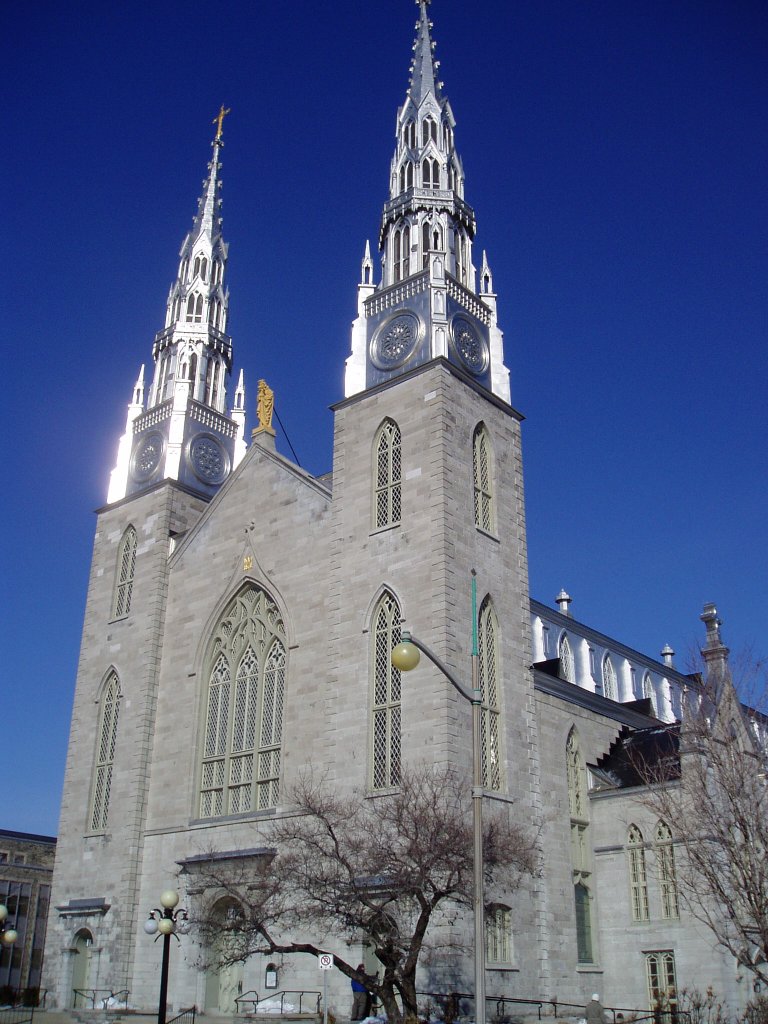
Throughout the Year of Mercy designated by our Holy Father Pope Francis, a plenary indulgence applied either to oneself or to a poor soul in purgatory, is available to all those Catholics who make pilgrimage to the Cathedral. In order to obtain the indulgence, one must go to confession within the space of 8 days before or after your visit, be in the state of grace and receive Holy Communion the day of your visit, pass through the designated ‘Door of Mercy’, recite the Creed, then recite an Our Father for the intentions of the Holy Father.   Let’s take advantage of this indulgence by making pilgrimage to one of the most beautiful and historic churches in Canada !
 

Parish Potluck on Sunday !

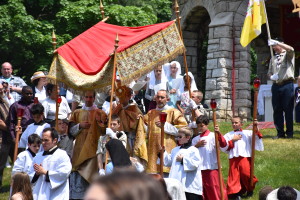
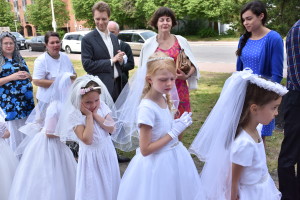
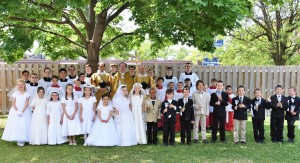
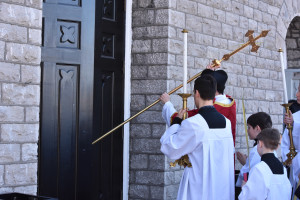
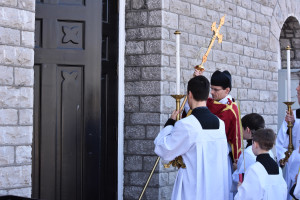
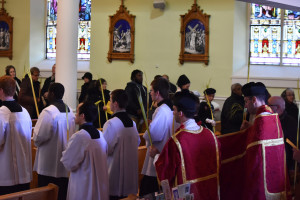
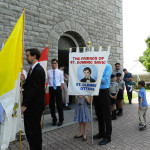
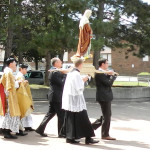
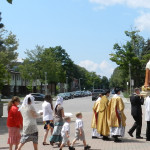
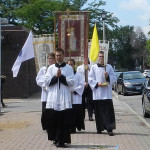
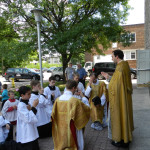
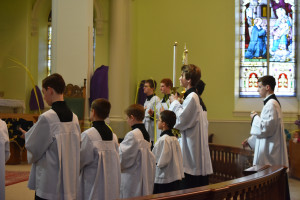
Come and celebrate Corpus Christi and our 1st Holy Communion children’s big day after the 10:30 am Mass at the gymnasium of the Patro D’Ottawa, 40 Cobourg St. (right behind our church). The potluck will begin after the procession.  Bring your favourite dish to share!  Volunteers appreciated.  Please sign up at the entrance of the Church.

Potluck 2    St. Clement StatueCorpus.png

Confession Times During Lent

In addition to our regular confession times (30 min prior to all Masses 7 days a week), we have added to our schedule for Lent confessions on Saturdays from 3:30 to 4:30 pm. Take advantage of this opportunity to be reconciled with the Lord during the Lenten season.

Important Message from the Archbishop on Euthanasia and Assisted Suicide; Novena requested

Novena to Saint Joseph (requested by the Archbishop;  to be said March 10 – 18)
Glorious St. Joseph, foster-father and protector of Jesus Christ! To you I raise my heart and my hands to implore your powerful intercession. Please obtain for me from the kind Heart of Jesus the help and the graces necessary for my spiritual and temporal welfare. I ask particularly for the grace of a happy death and the special favour I now implore.
[Mention your request here.]
Guardian of the Word Incarnate, I feel animated with confidence that your prayers in my behalf will be graciously heard before the throne of God.

V. O glorious St. Joseph, through the love you bear to Jesus Christ, and for the glory of His Name.
R. Hear my prayers and obtain my petitions. Amen.

Important Message from the Archbishop of Ottawa:

Dear brothers and sisters in Christ,

On February 6, 2015, the Supreme Court of Canada redefined medical ethics by striking down Canada’s Criminal Code prohibition of assisted suicide. This decision causes concern because authorities could interpret the subjective language of the Court decision to allow euthanasia, with few or no constraints. The result? Society would abandon people at their most vulnerable stage, rather than provide proper medical care for their suffering and need. This is precisely how the Parliamentary Committee, which recently published its recommendations on February 25, viewed the Supreme Court decision.

From not only a Catholic perspective but any rational perspective, the intentional, willful act of killing oneself or another human being is clearly morally wrong. How can a just society permit the state-sanctioned taking of lives by our physicians? When any life is vulnerable and can be taken at will, the dignity of all lives is seriously eroded. Respect for all human life in our society is jeopardized.

Advocates for assisted suicide and euthanasia often raise the issue of managing severe, chronic pain. They propose terminating the patient’s life as the best “medical treatment.” Many people do indeed fear physical pain, but the Church teaches that patients in the final phase of terminal illness may receive whatever pain relief is required, even if, indirectly, it could shorten their life. The principle involved here is simple and clear: the goal of the medication is to ease the patient’s great pain, not to hasten their death.

The Catechism of the Catholic Church explicitly teaches us, “whatever its motives and means, direct euthanasia consists in putting an end to the lives of handicapped, sick, or dying persons. It is morally unacceptable” (n. 2277). The right to life is not a matter for Christians only. It is a human right for all. To formally cooperate in the killing of the disabled, frail, sick, or suffering, even if motivated by a misplaced compassion, requires a prior judgement that such lives do not have value and are not worth living. But all human life has value. The law should protect all life. No one forfeits the right to life because of illness or disability.

The Catholic Church does not advocate prolonging life at any cost. Rather, the Church is guided by the principle of the quality of life that considers the whole person and not simply keeping the body going no matter what. As rational Catholic Christians, we ask the question in evaluating whether or not to accept life-prolonging treatment: is there a reasonable hope of benefit without excessive pain, expense, or other serious problem?

As your bishop and your brother in Christ, I exhort you to fast and pray that our parliamentarians heed our concerns. Please take part in a Novena to St. Joseph from March 10–18. Let us pray that our legislators at the national and provincial levels will protect life, especially that of the most vulnerable, and that they will respect the right of medical professionals to refuse to take part in assisted-dying.

What else can you do? Take these concerns to your Member of Parliament and Member of Provincial Parliament. You may also join or start a parish pro-life group to support the work of resisting the culture of death and nurturing the culture of life in Canada. Talk to your friends and co-workers about the grave threat to human dignity and life that assisted suicide and euthanasia pose to our most vulnerable neighbours. Explain to your children, grandchildren, friends, and associates the importance of reverencing human life that begins at conception in the womb and ends in natural death.

I encourage you to be an agent of mercy in this Jubilee Year of Mercy–“feed the hungry, give drink to the thirsty, clothe the naked, welcome the stranger, comfort the sick, visit the imprisoned, and bury the dead.” Catholics, like all other citizens, have a right and a duty to participate in the political process of our democracy. We must act to uphold the dignity of every human life.

Take courage. Do not be afraid to stand up for the value and dignity of life. Catholic Christians have a special role to play in resisting this culture of death. I call on all Catholics to be strong supporters and proponents of the Gospel of Life. Make your voice heard.

✠ Terrence Prendergast, S.J.
Archbishop of Ottawa


Parish Raffle – Pulpit Restoration Fund

In support of our pulpit restoration project. 1st prize: Hand-made pine bench with storage under the seat ! Perfect for storing your scarves, mittens, shoes, or whatever else needs organizing!  2nd Prize:  Basket of misc kitchen items including the DVD “Song of Bernadette” and organic spices from Epicure. Tickets are $10 each or 3 tickets for $20.   To be included in the draw fill out the ‘yellow’ Restoration fund envelope with “Parish Raffle” on it & include your donation of $10 (for one) or $20 (for 3), then drop in the collection basket. The draw will be held on Easter Sunday. Thank you for your support of this project !

IMG_20160226_130622IMG_20160108_105507-3

Funeral for Mr. Bernard Pothier Thursday Feb. 25, 11:00 am

(Please note that the 12:00 am Mass is cancelled in lieu of the funeral.  Please keep the deceased and his family in your prayers.)

POTHIER, Bernard Alexander

b. Inverness, NS August 17, 1936,

d. Ottawa, ON February 21, 2016.

The son of Louis Pothier and Margaret Chisholm Pothier. Survived by Jean Dolorosa MacIsaac, his wife of more than 50 years; his four children, Chisholm, Julian, Helena-Maria and Natasha; his sons-in-law Christian and Philippe; and ten grandchildren: Jack, Hailey, Crispin, Philippa, Isabel, Mariel, Marc, Margaret, Olivia and Isaac. Also survived by his sisters Norine, Alexandra (Archie), Louise and Clare and his in-laws Bernie and Sr. Linda, He served many years as a historical researcher and curator, chiefly in the federal government service, and devoted his retirement years to contemporary Catholic studies and parish apostolates. Special thanks to extended family, parish priests, parishioners, family friends and devoted caregivers for their attention these last several months. Friends may pay their respects to the family at Whelan Funeral Home, 515 Cooper St. (between Bay & Lyon) on Wednesday, February 24 from 1:00 to 4:00 and 7:00 to 9:00 p.m. Recitation of the Rosary to take place at 3 p.m. Mass and prayer offerings or donations to St. Clement Parish gratefully accepted in lieu of flowers. Latin Requiem Mass at St Clement Parish, 528 Old St Patrick St., Lower Town on Thursday, February 25, 2016 at 11 a.m. followed by burial at Hope Cemetery.
Arrangements entrusted to the Whelan Funeral Home
tel. 613-233-1488

Preparing for Lent with Mary: Sat. Feb. 6th

Next Saturday the Legion of Mary will be having a day of recollection here in the Church. Parishioners are welcome to attend the morning session which will include mass at 9:00 am, a spiritual talk at 10:00 am, followed by Exposition of the Blessed Sacrament from 11:00 to 12:00 with confessions.   The theme will be “Preparing for Lent with Mary”

Chartres Pilgrimage with Fr. Antony Sumich, FSSP

John Paul Sonnen of Orbis Catholicus Travel in Vancouver has put together a 2016 Chartres Pilgrimage Tour to be led by Fr. Antony Sumich, FSSP, who currently serves the FSSP Latin Mass in Calgary, Alberta.  The Pilgrimage includes a sacrificial 3 day walk from Notre-Dame de Paris to Chartres Cathedral.

Feel free to share the attached itinerary or news of the tour with anyone you may think is interested.

Deadline for registration is March 1st.

The tour includes Paris, Chartres, Munich, Salzburg and Vienna.   Click the link below for more information.

Chartres Tour 2016 with Fr. Sumich FSSP


Jubilee Year of Mercy

A message from Archbishop Terrence Prendergast, S.J. on the Jubilee Year of Mercy:

Jesus Shows Us the Face of the Father’s Mercy:
A Pastoral Letter for the Year of Mercy 2015-2016

Dear brothers and sisters in Christ:

“Jesus Christ is the face of the Father’s Mercy”. With these words Pope Francis invited everyone to take part in a special Jubilee Year of Mercy. It will begin on this year’s Solemnity of Mary’s Immaculate Conception, December 8, 2015 and end on next year’s Solemnity of Christ the King, November 20, 2016.

Mercy is “the bridge that connects God and humanity, opening our hearts to the hope of being loved forever despite our sinfulness,” the Holy Father wrote in Misericordiae Vultus (The Face of Mercy) instituting the Year of Mercy.

What is the Holy Father asking us to do during this special year? Two things: first, to make a good personal confession and secondly, to commit ourselves to perform works of mercy.

How are these connected? Well, it’s important for us to experience the loving and forgiving mercy of God in the Sacrament of Reconciliation, a graced encounter that brings inner healing, peace and joy. Once we have tasted God’s mercy ourselves, we are moved often to share that gift with others who have needs both material and spiritual.

So I am inviting each Catholic to celebrate the Sacrament of Reconciliation—to go to Confession—at least once during the Year of Mercy. Pope Francis continually reminds us that we may tire of asking God for pardon and mercy, but he never tires of showing us mercy.

Then, in gratitude for God’s forgiveness let us show mercy to those in need. I am inviting each Catholic of our Archdiocese of Ottawa who is able to do so to perform sometime during this special year one corporal work of mercy and one spiritual work of mercy.

The corporal works of mercy are well known: to feed the hungry; to give drink to the thirsty; to clothe the naked; to shelter the homeless; to visit the sick; to visit the imprisoned; to bury the dead. We are asked by Christ to recognize him in anyone in need: “Amen, I say to you, whatever you did for one of the least of these my brethren, you did for me” (Matthew 25.40)

The spiritual works of mercy are less well known but they are also important for the spiritual vitality of our faith community: to instruct the ignorant; to counsel the doubtful; to admonish sinners; to bear wrongs patiently; to forgive offences willingly; to comfort the afflicted; to pray for the living and the dead. The first three may require a special level of authority, competence or even extraordinary tact. The latter four are ways for us to express in daily living our life as disciples of Jesus.

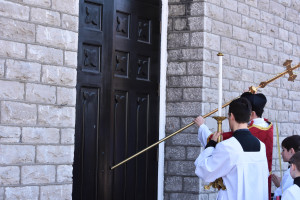
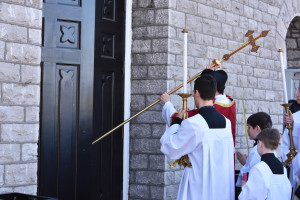
Pope Francis has given each diocese the privilege of designating a Door of Mercy in the cathedral church. Traditionally such a sacred door represents the passage to salvation as well as the entryway to God’s mercy. There are seven permanent Holy Doors in the world, including the one at Notre Dame Basilica in Quebec City. These doors are normally sealed from the inside and are opened during jubilee years when those who travel to the Holy Door or Door of Mercy on a spiritual journey—known as “pilgrims”—can enter through them to gain a plenary indulgence connected with the jubilee.

On December 8, Pope Francis will usher in the Year of Mercy by opening the Holy Door of St. Peter’s Basilica. The following Sunday, December 13 churches throughout the world will open designated “doors of mercy”.

In Ottawa, we will bless our special Door of Mercy in Notre Dame Cathedral on December 8 at special 7:30 PM Mass marking our cathedral’s patron Mary Immaculate and formally open it to pilgrims at the 9 o’clock Mass on Sunday morning, December 13.

Pilgrims are encouraged to pass through this special door during the Year of Mercy, thinking not only of God’s mercy for each of us but also of ways they can be charitable to those around them.

After passing through the designated door, pilgrims are called to complete their pilgrimage by receiving the Sacrament of Reconciliation and Holy Communion, professing the faith by reciting the Creed and praying for the Holy Father’s intentions. They can do this to obtain an indulgence for themselves or for one of the deceased. More information about indulgences and how to share in these spiritual riches is available at each parish and details are posted on the archdiocesan website (catholicottawa.ca).

I hope that many Catholics, including those who have become distant from the church, will make a pilgrimage to pass through the Door of Mercy at Notre Dame. You are invited to do this individually or with fellow parishioners, members of a parish or Catholic association (prayer groups, Cursillo-Challenge, Knights of Columbus, Catholic Women’s League, etc.).

Let us invoke Mary’s intercession that many may come to know more deeply the joy of God’s compassion and loving forgiveness and be able to pass it on to others in good works during this Year of Mercy.
✠ Terrence Prendergast, S.J.
Archbishop of Ottawa

Feast of Saint Anne 2015

First Mass of Fr. Alexandre Marchand

Priestly Ordinations in St-Hyacinthe, Québec

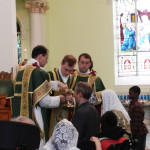
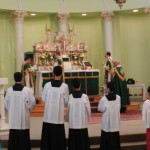
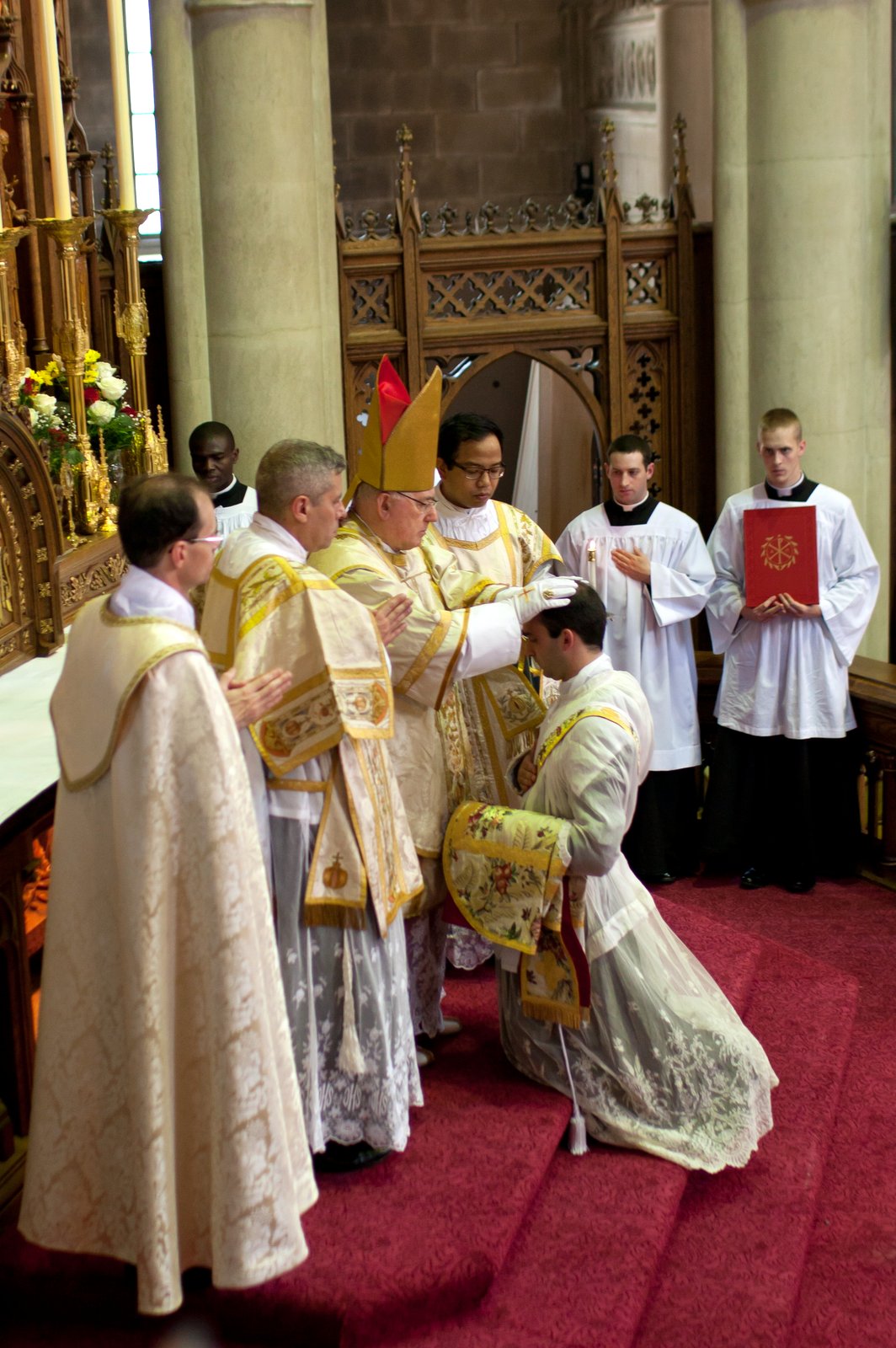
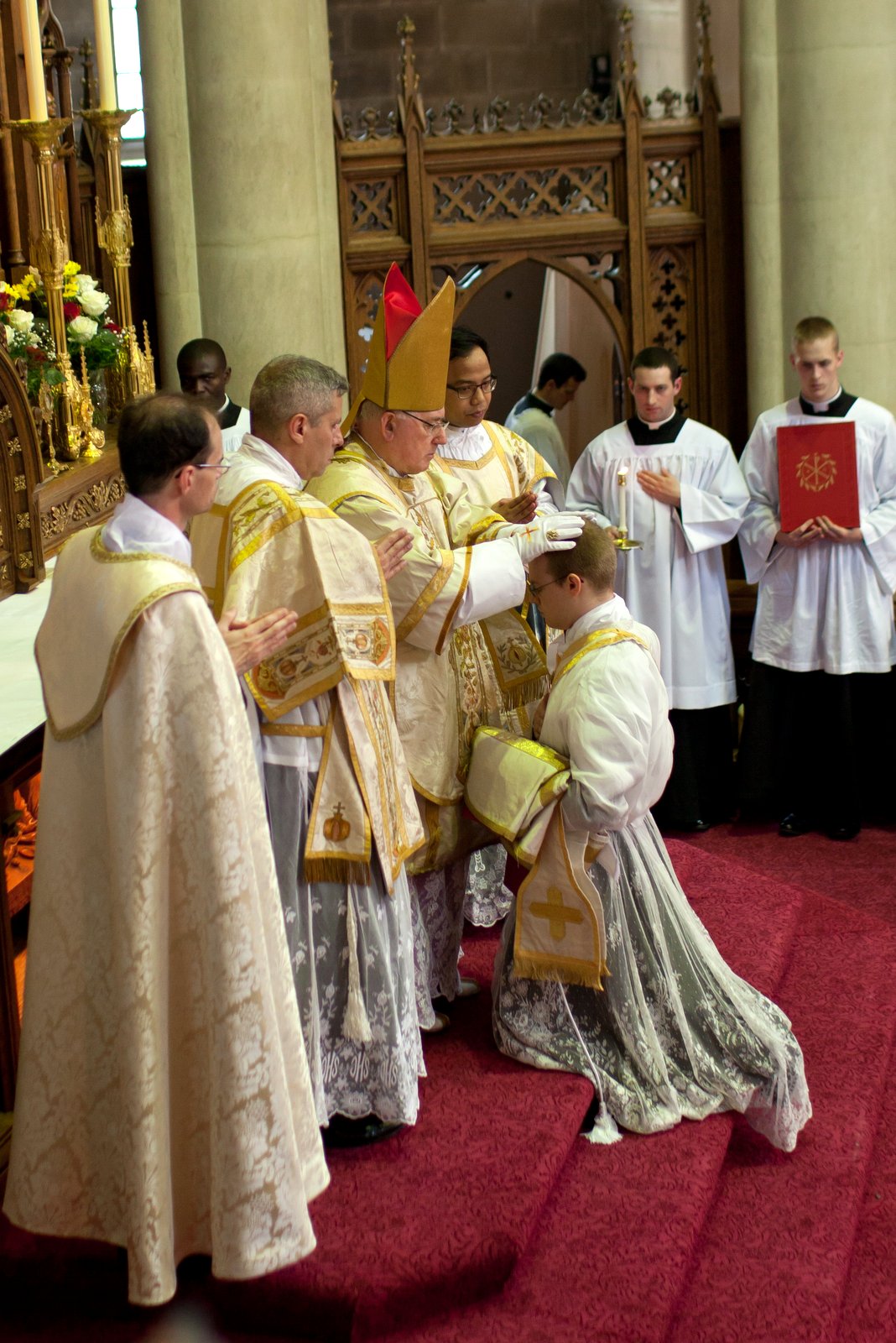
A historical moment took place for the FSSP in Québec : on the 13th of June Deacons Jacques Breton and Alexandre Marchand were ordained to the priesthood in the traditional rite in the beautiful seminary chapel of St-Hyacinthe by his grace Archbishop Terrence Prendergast, S.J., Archbishlop of Ottawa.  Deo Gratias!

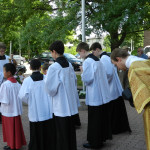
Father Hubert Bizard, vice rector of our seminary in Wigratzbad, was the master of ceremonies, assisted by seminarians from Our Lady of Guadalupe seminary (Denton, Nebraska), as well as by altar servers from St. Clement Parish in Ottawa.

The deacon was Fr. Laurent Demets (Québec City), Subdeacon was Fr. Juan Tomas, (Montréal), and the assistant priest was Fr. Erik Deprey (Ottawa).

The Archbishop’s sermon can be accessed from his website:
Ordinations St-Hyacinthe

Thank-you, your Grace, for your support of the FSSP !

M. l’abbé Breton
M. l’abbé Marchand


Feast of the Precious Blood: Wed. July 1st, 10:00 am Solemn High Mass

The month of July is dedicated to the Precious Blood. The feast of the Precious Blood of our Lord was instituted in 1849 by Pius IX, but the devotion is as old as Christianity. The early Fathers say that the Church was born from the pierced side of Christ, and that the sacraments were brought forth through His Blood.

“The Precious Blood which we worship is the Blood which the Savior shed for us on Calvary and reassured at His glorious Resurrection; it is the Blood which courses through the veins of His risen, glorified, living body at the right hand of God the Father in heaven; it is the Blood made present on our altars by the words of Consecration; it is the Blood which merited sanctifying grace for us and through it washes and beautifies our soul and inaugurates the beginning of eternal life in it.”

Feast of the Nativity of St. John the Baptist: Wed. June 24th, 7:00 pm


Father Weiser explains the origin of honouring St. John the Baptist, the feast days and Church’s traditions and provides some customs celebrated on his feasts in various countries.

DIRECTIONS
This saint was highly honored throughout the whole Church from the beginning. Proof of this is, among other things, the fact that fifteen churches were dedicated to him in the ancient imperial city of Constantinople. Being the precursor of our Lord, he was accorded the same honor as the first great saints of the Christian era, although he belonged to the Old Covenant. The fact that Christ praised him so highly (Matthew 11, 11) encouraged, of course, a special veneration. Accordingly, we find a regular cycle of feasts in his honor among the early Christian churches.

It was the firm belief among the faithful that John was freed from original sin at the moment when his mother met the Blessed Virgin (Luke 1, 45). Saint Augustine mentioned this belief as a general tradition in the ancient Church. In any case, it is certain that he was “filled with the Holy Spirit even from his mother’s womb” (Luke 1, 15) and, therefore, born without original sin. Accordingly, the Church celebrates his natural birth by a festival of his “nativity,” assigned exactly six months before the nativity of Christ, since John was six months older than the Lord. As soon as the Feast of Christmas was established on December 25 (in the fifth century) the date of the Baptist’s birth was assigned to June 24.

The question arises of why June 24, and not 25. It has often been claimed that the Church authorities wanted to “Christianize” the pagan solstice celebrations and for this reason advanced Saint John’s feast as a substitute for the former pagan festival. However, the real reason why Saint John’s Day falls on June 24 lies in the Roman way of counting, which proceeded backward from the calends (first day) of the succeeding month. Christmas was “the eighth day before the Kalends of January” (Octavo Kalendas Januarii). Consequently, Saint John’s nativity was put on the “eighth day before the Kalends of July.” However, since June has only thirty days, in our way of counting the feast falls on June 24.

The Council of Agde, in 506, listed the Nativity of Saint John among the highest feasts of the year, a day on which all faithful had to attend Mass and abstain from servile work. Indeed, so great was the rank of this festival that, just as on Christmas, three Masses were celebrated, one during the vigil service, the second at dawn, the third in the morning. In 1022, a synod at Seligenstadt, Germany, prescribed a fourteen-day fast and abstinence in preparation for the Feast of the Baptist. This, however, was never accepted into universal practice by the Roman authorities.

On August 29 the death of the saint is honored by a Feast of the Beheading. A third festival was celebrated in the Oriental Church in honor of “Saint John’s Conception” (on September 23), commemorating the fact that an angel had announced his conception. This feast, however, was not adopted by the Latin Church. The Greek Rite (on the day after Epiphany), and recently also the Latin Church (on January 13), keep a feast in memory of Saint John baptizing the Lord.

The Baptist is patron of tailors (because he made his own garments in the desert), of shepherds (because he spoke of the “Lamb of God”), and of stone masons. This patronage over masons is traced to his words:

Make ready the way of the Lord, make straight all his paths. Every valley shall be filled, and every mountain and hill shall be brought low, And the crooked shall be made straight, and the rough ways smooth. (Luke 3, 4-6.)

All over Europe, from Scandinavia to Spain, and from Ireland to Russia, Saint John’s Day festivities are closely associated with the ancient nature lore of the great summer festival of pre-Christian times. Fires are lighted on mountains and hilltops on the eve of his feast. These “Saint John’s fires” burn brightly and quietly along the fiords of Norway, on the peaks of the Alps, on the slopes of the Pyrenees, and on the mountains of Spain (where they are called Hogueras). They were an ancient symbol of the warmth and light of the sun which the forefathers greeted at the beginning of summer. In many places, great celebrations are held with dances, games, and outdoor meals.
Fishermen from Brittany keep this custom even while far out at sea in the Arctic Ocean. They hoist a barrel filled with castoff clothing to the tip of the mainsail yard and set the contents on fire. All ships of the fishing fleet light up at the same time, about eight o’clock in the evening. The men gather around the mast, pray and sing. Afterward they celebrate in their quarters, and the captain gives each crew member double pay.

Another custom is that of lighting many small fires in the valleys and plains. People gather around, jump through the flames, and sing traditional songs in praise of the saint or of summer. This custom is based on the pre-Christian “need fires” (niedfyr, nodfyr) which were believed to cleanse, cure, and immunize people from all kinds of disease, curses, and dangers. In Spain these smaller fires (fogatas) are lighted in the streets of towns and cities, everybody contributing some old furniture or other wood, while children jump over the flames. In Brest, France, the bonfires are replaced by lighted torches which people throw in the air. In other districts of France they cover wagon wheels with straw, then set them on fire with a blessed candle and roll them down the hill slopes.

As the first day of summer, Saint John’s Day is considered in ancient folklore one of the great “charmed” festivals of the year. Hidden treasures are said to lie open in lonely places, waiting for the lucky finder. Divining rods should be cut on this day. Herbs are given unusual powers of healing, which they retain if they are plucked during the night of the feast. In Germany they call these herbs Johanneskraut (St. John’s herbs), and people bring them to church for a special blessing.

In Scandinavia and in the Slavic countries it is an ancient superstition that on Saint John’s Day witches and demons are allowed to roam the earth. As at Halloween, children go the rounds and demand “treats,” straw figures are thrown into the flames, and much noise is made to drive the demons away.

It should be noted, however, that in the Catholic sections of Europe the combination of the ancient festival of nature lore with the Feast of the Baptist has resulted in a tradition of dignified celebration, which has come down to our day. People gather around the fireplace, dressed in their national or local costumes, and sing their beautiful ancient songs. When the fire is lighted, one of them recites a poem that expresses the thought of the feast. Then they pray together to Saint John for his intercession that the summer may be blessed in homes, fields, and country, and finally perform some of the traditional folk dances, usually accompanied by singing and music.

LITURGICAL PRAYER — O God who hast made this an honored day for us by the birth of Saint John: bestow upon Thy people the grace of spiritual joys, and guide the hearts of all Thy faithful into the way of eternal salvation.

Activity Source: Handbook of Christian Feasts and Customs by Francis X. Weiser, S.J., Harcourt, Brace and Company, New York, 1958