




For You make me glad by Your deeds, Lord;
I sing for joy at what Your hands have done.
– Psalm 92: 4
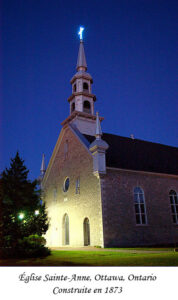
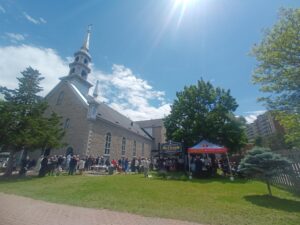
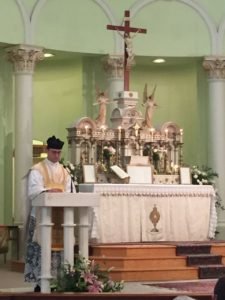
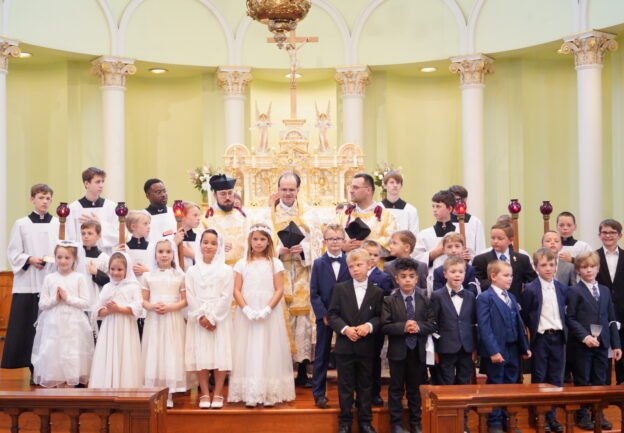
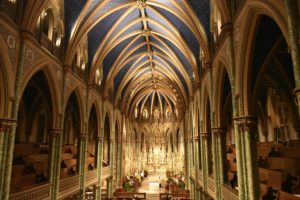
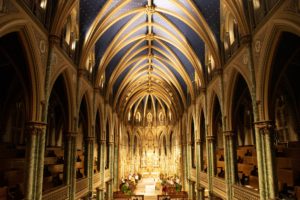
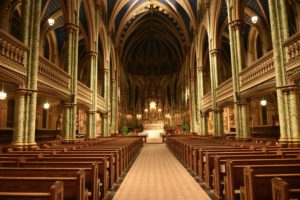
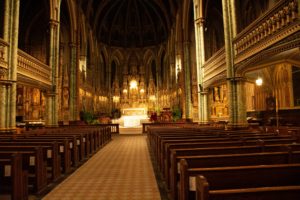
Looking back on the years that have passed since 2012 when they first assumed stewardship of Saint Anne Church, parishioners of Saint Clement will have many reasons to give thanks for the abundance of blessings showered on their achievements.
Those many achievements – some small, others big – all share in common faith, prayer and the generosity of countless volunteer hours. To this must be added the unstinting financial support of a community of faithful anxious to see their historic 19th century church return to something of its former self.
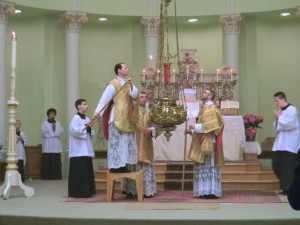
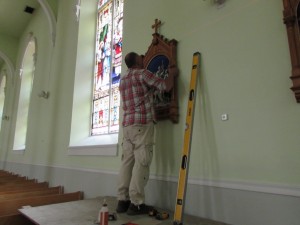
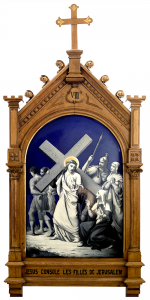
The first project of note – the return of the bells in time to celebrate Easter 2013 delighted many and incredibly, caught the attention of national media outlets. A year later, Saint Anne’s former sanctuary lamp underwent careful restoration and after an absence of many years, was returned to its rightful place before the tabernacle. That same year parishioners’ generous response to an appeal launched on July 1st 2014, after the Mass celebrating the feast of the Precious Blood, made it possible, within just a few days, to cover the costs of installing a magnificent Limoges Stations of the Cross.
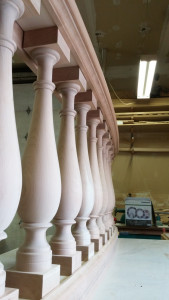
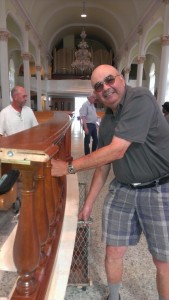
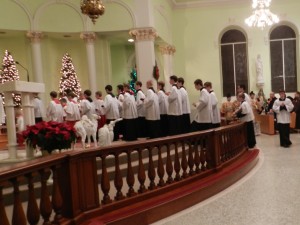
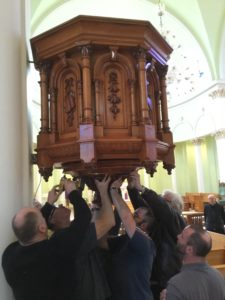
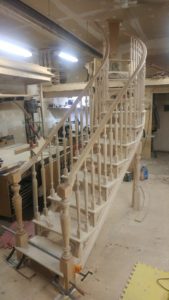
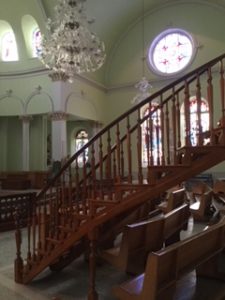
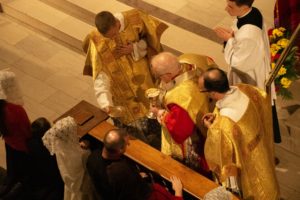
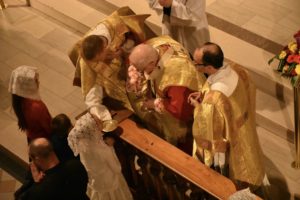
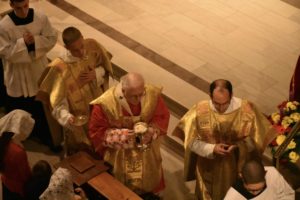
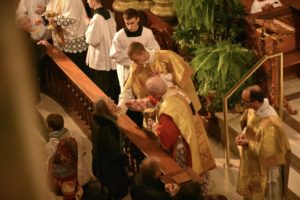
The undertaking of projects of greater scope came shortly after with the installation in 2015 of a fervently desired altar rail. Made of cherry and spanning the church’s 70-foot transept, it is the result of the skilled work of two talented parishioners. In 2018 that same team successfully met the challenge of creating a faithful replica of the original stairs that made it possible for Saint Anne to once again be fitted with a traditional pulpit. Several months later they would go on to ensure the installation of a new hardwood floor in the sanctuary.
Before and after Videos:
https://www.statuerestorers.com/restoration-videos
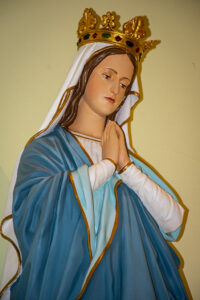
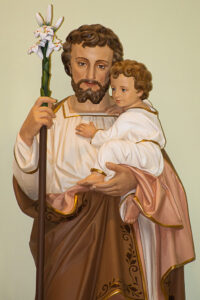
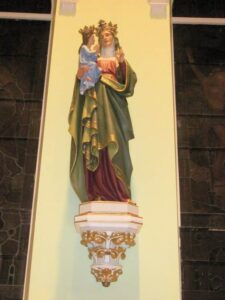
The result of a different set of gifts, the restoration of the church’s statuary has greatly pleased parishioners with every new workshop delivery. The statues of Saint Anne and the Virgin Mary as a Young Girl, Saint Joseph with the Child Jesus and the one of Our Lady above Mgr. Myrand’s altar, all whitewashed in the 1960s, have benefitted from the work of talented parishioners who have successfully returned them to works of art worthy of the devotions they inspire.
One other much appreciated arrival came in 2018 and was thanks to the generosity of benefactors who gifted the parish with the two statues of the Adoring Angels which had originally stood, one on either side of the High Altar in the chapel of the Monastery of the Precious Blood. Today they are thus once again united with their altar and in their intended places.
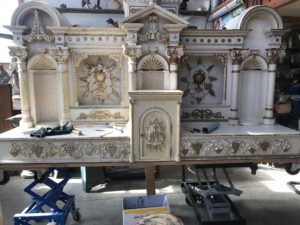
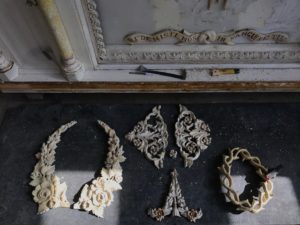
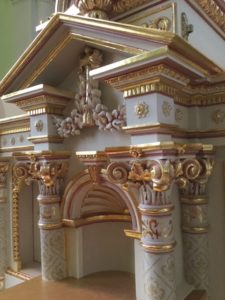
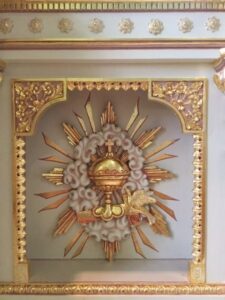
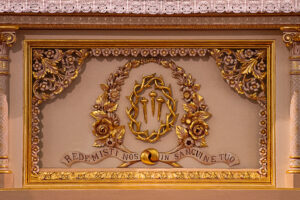
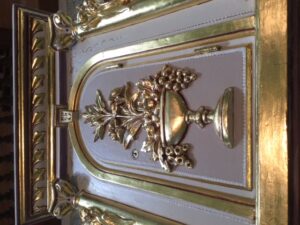
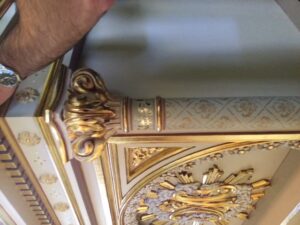
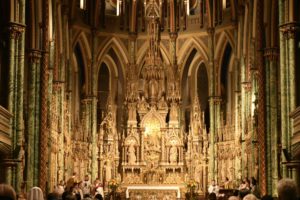
Perhaps the project dearest to parishioners to take place since the move to Lower Town was the one that saw the fulfillment of an ardent, long-held wish of theirs: the restoration of the altars of the Precious Blood carried out between 2019 and 2021.
Inexorably tied to parish identity, the altars have accompanied the people of Saint Clement Parish since the very beginning. Conceived in the last years of the 19th century for the second chapel of the Sisters Adorers of the Precious Blood, the altars have remained at the heart of the parish’s liturgical celebrations.
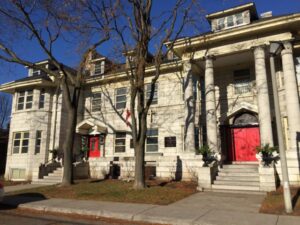
What can only be described as an act of providential intervention occurred in 2019 when unexpectedly, Saint Clement Parish was able to reunite two important Lower Town landmarks: Saint Anne Church and what is without doubt one of Ottawa’s finest ecclesiastical buildings – the church’s former rectory, located at number 17 Myrand Avenue.
Since 2019 the former rectory has benefitted from much needed attention in terms of new roofing, gutter replacement and exterior painting as well as the beginnings of interior refurbishment.
Built in 1921-1922, the impressive Beaux-Arts Style rectory passed through the hands of several owners over time. Today, the elegant building has returned to its original vocation and once more serves a community of Roman Catholics who worship in the stone church only an arm’s length away.
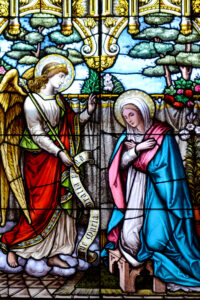
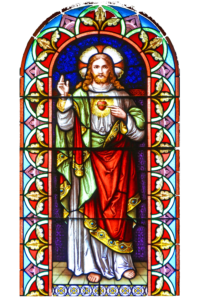
Many of the stained glass windows at Saint Anne are signed N.T. Lyon Co., Toronto, 1908, a Canadian art glass firm of the first order. Once the generous purchase of earlier parishioners, those of today have successfully undertaken the specialized work involved in restoring this precious heritage.
The first window to undergo restoration in 2016 was the one featuring the Visitation. Although some of the windows of Saint Anne still await attention, many have since then received careful, professional treatment. Much to everyone’s satisfaction, it was possible in 2020 to re-position the right way around the windows high on the sanctuary wall which, somehow and for unknown reasons, had been reversed. As a result, the four figures on either side of Our Lord are now shown facing Him as He raises His right hand in blessing.
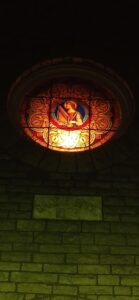
One window that until August of this year very few really noticed and certainly never saw from the church’s interior, is the one dedicated to Saint Cecilia, patron saint of music. Installed in the church façade in 1908, it was hidden from interior view in 1917 when extensive work involving the organ pipe and wind system was undertaken. Today thanks to back-lighting, parishioners and passersby can once again admire the fine rose window image which becomes fully visible from the street after dark.
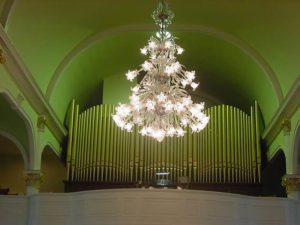
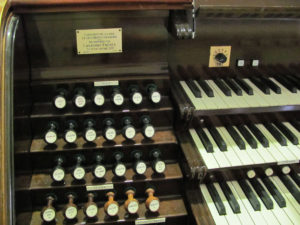
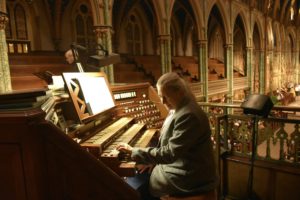
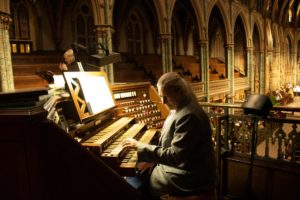
The church’s Casavant organ too has been enhanced. In 2014, after a hundred years of service, a new electric motor was installed on the air pump – the instrument’s “lungs” as it were; a necessary and not surprising thing given the instrument’s age. Recently, in 2022 it was outfitted with an enhanced level of 256 memory levels at the console making it possible for the organist to call upon an infinite variety of colours and sound changes. In short, the instrument was upgraded to the maximal potential use for our numerous, specific liturgies.
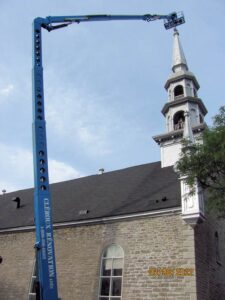
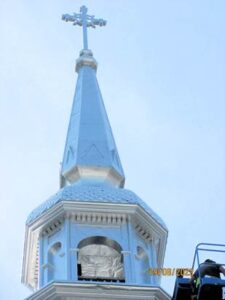
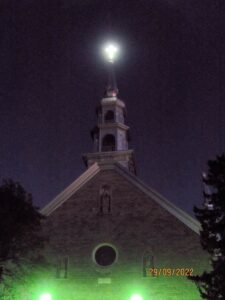
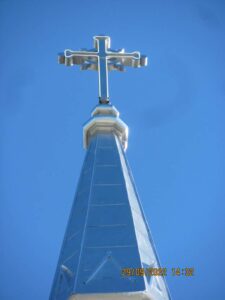
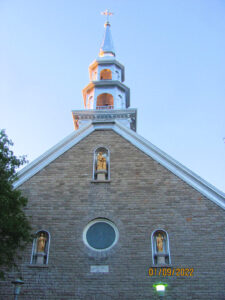
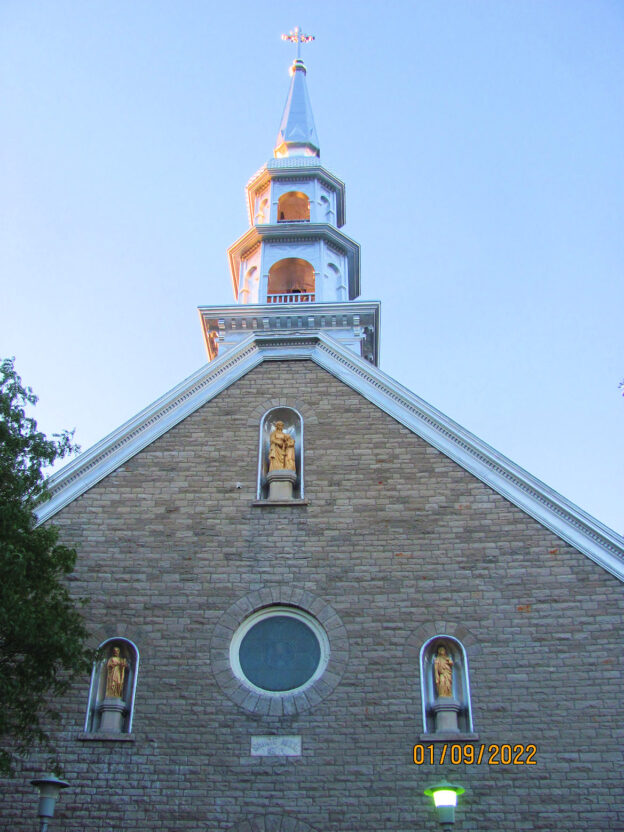
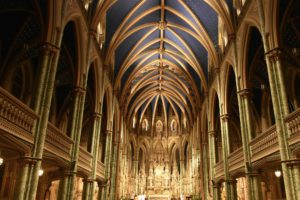
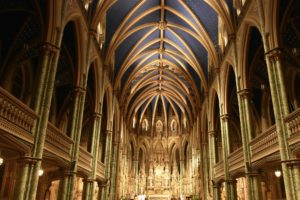
Immediately following the 2022 August Civic holiday, work began on repainting the cross, bell tower and small side turrets that adorn Saint Anne. The result of the much needed restoration work is that today, they look as bright and beautiful as they must have done immediately after their installation in 1908.
If passersby will certainly notice the new look of the steeple and turrets, they will also immediately notice that the three statues set into the façade – in the centre that of the church’s patron, Saint Anne with the Virgin as a young girl flanked by those of Saints Peter and Paul – having received a fresh bronze-coloured coat, now show to greater advantage. Watching over the church as they have always done, they will now be seen at night in the reflected light from Saint Cecilia’s window and the illuminated cross high on the steeple.
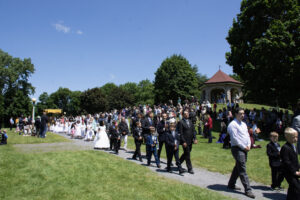
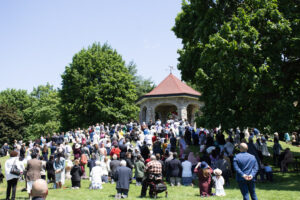
As we very rightly give thanks to God for what is without a doubt an impressive list of blessings bestowed on parish initiatives over the last ten years, it will be especially important to give Him thanks for what is unquestionably the most important and precious one of all: parish growth.
When Saint Clement Parish assumed stewardship of Saint Anne Church in 2012, a count of the number of people in attendance at the three Sunday Masses stood at 450 on average. Today, the number of faithful regularly reaches around 750. That number includes many young families and an important contingent of youth, all of whom bring to the church new life and energy which has greatly enriched the parish, breathed new life into its organizations and in some cases, been responsible for their rebirth. When next year the parish marks the 150th anniversary of the construction of Saint Anne, it will do so as a growing, dynamic parish of fervent Roman Catholics whose trust in God has been richly rewarded and who in faith, can look to the future and its challenges with confidence.
Deo Gratias!

The team charged with drafting the parish response to Pope Francis’ call last October for parish input on the nature of the Church and the specific way of living and operating as a Church has completed its report, which is now with the Archdiocese of Ottawa-Cornwall. The full document can be accessed via the electronic link that appears below.
The report is based exclusively on the comments provided by a wide range of parishioners who, willingly and candidly, shared their Faith experiences as lived out at St. Clement Parish. It is an impressive piece of work that captures the pulse of St. Clement Parish and reflects well on all of its faithful. To the Parish Synodal team, a heartfelt Thank You!
IN AETERNUM – Saint Clement Parish Synod 2022
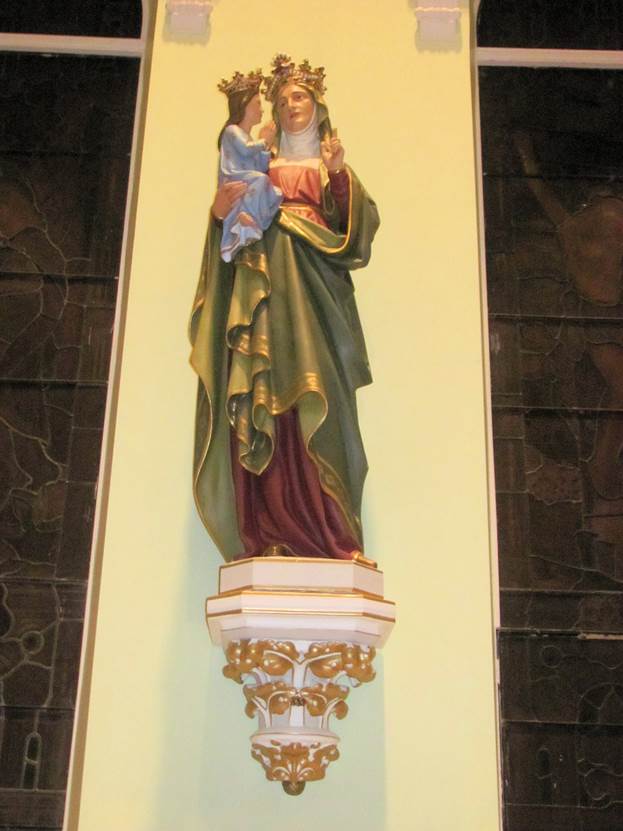
Here is a beautiful video showing the restoration process of our statue of St. Ann — enjoy ! Many thanks to the Winogron’s for their fine work !
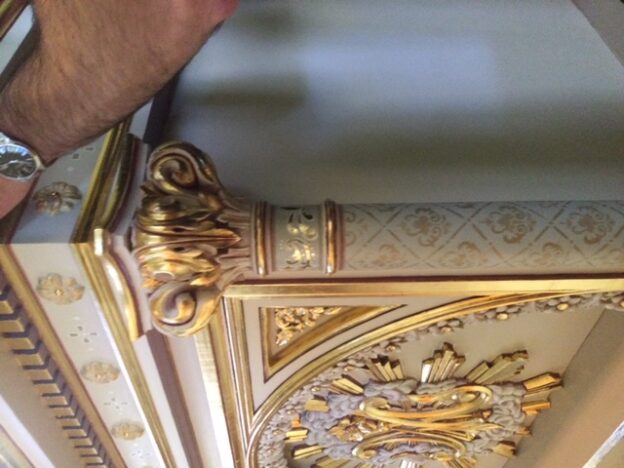
Newly restored, Our Lady’s Altar was returned to its place in the sanctuary last week.
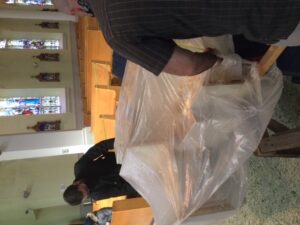
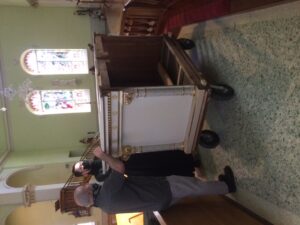
Having all three of its altars restored to their former state has been the fervent desire of many of the faithful and their priests ever since the nascent parish of Saint Clement acquired them in 1984 and thus saved them from certain destruction.
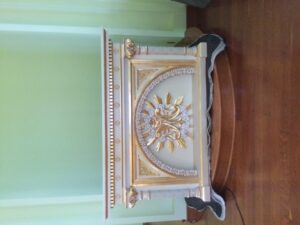
Parishioner generosity has made possible the realization of many prayers by ensuring a very successful Side Altar Restoration Campaign. As of the end of December 2020, parishioners had contributed $29,345.00 to the project involving this second side altar which was budgeted at $24,800 (plus applicable taxes). The additional funds received will be directed to other sanctuary restoration work.
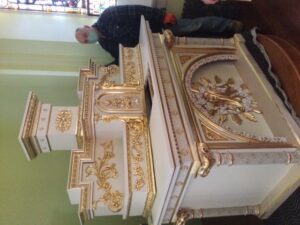
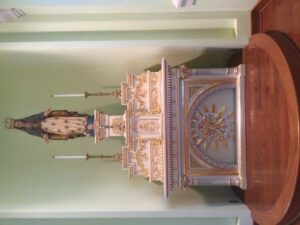
The work to restore the side altars was undertaken by Atelier Plantagenêt who in 2019, carried out the restorative treatment of the high altar.
Thank you for your generosity!


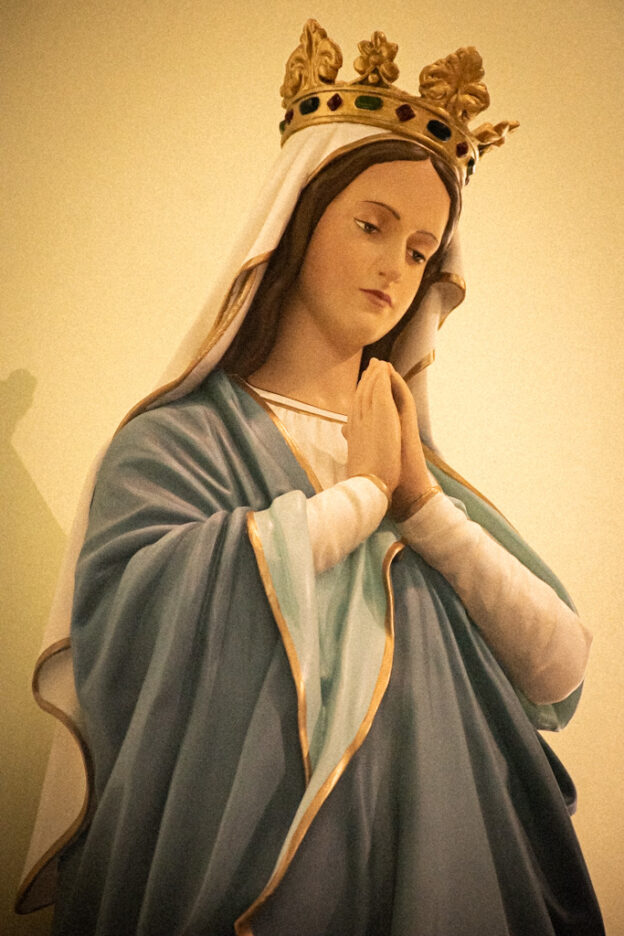
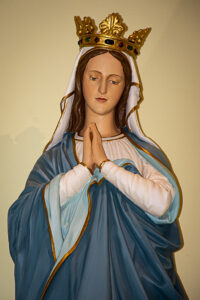
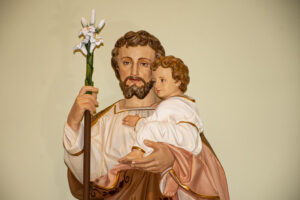

The beginning of this fall season brings with it the near completion of various important preparatory stages involved in the restoration of the altars dedicated to Our Lady and Saint Joseph.


The meticulous work required in carefully removing multiple layers of over paint applied through the years in order to re-discover the crispness of the carving as well as the original design and paint treatment to be replicated, is painstaking and requires patience. It is however, essential for it will ensure that when the altars are returned to their place in the sanctuary at Saint Anne, they will be in a state as faithful as possible to the one in 1898 when, together with the high altar, they were installed in the monastery chapel of the Sisters Adorers of the Precious Blood.


With the approval of the Archdiocese, the work required to restore the side altars is currently being undertaken by Atelier Plantagenêt who carried out the restorative treatment on the high altar.

The expert attention required to restore the two side altars is expected to cost $24, 800 (plus applicable taxes). To date, parishioner generosity has raised $8,719.00 towards the cost of the restoration. You can help meet the projected cost by contributing to the Side Altar Restoration Fund.
Please use the yellow “Restoration” envelope clearly marked “Altar Restoration.”
Thank you for your generosity.


Restorations by their very nature sometimes reserve discoveries that are both unexpected and impossible to fully explain.
Such is the case with the restoration of one of Saint Clement’s side altars. Work being carried out on the altar dedicated to Saint Joseph has uncovered an early ex voto offering hidden behind the fabric lining tabernacle when it was removed for cleaning. How and why it came to be there is a mystery.
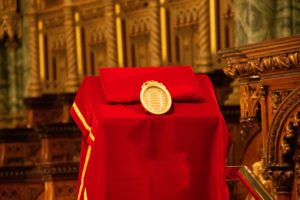
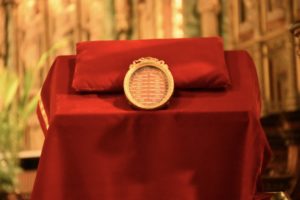
The ex voto consists of a donor card in gold lettering signed “Donné par L. Joseph Fauteux Ecr” and is accompanied by a heart-shaped silver votive medal surrounded by palm branches carrying the inscription “Sister Anne Marie, November 13th 1916.”
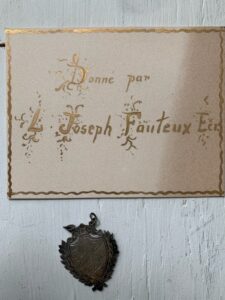
We don’t know the identities of either Joseph Fauteux or Sister Anne Marie and it is unlikely that we ever will. What we can be sure of however is that the votive offering was so important to Mr. Fauteux that he took pains to ensure that the card identifying him as the donor was done in gold lettering embellished with scroll work before placing it where, together with the silver memento carrying Sister Anne Marie’s name, it would be next to Our Lord in His tabernacle.
If Sister Anne Marie’s identity, like Mr. Fauteux’s, is unknown, so too is the significance of the date of November 13th, 1916. Was it her date of birth or that of her death? Was it perhaps the date the young woman entered religious life? We simply don’t know. All we know is that over one hundred years ago, both objects were entrusted to the safekeeping of Saint Joseph and carefully placed out of sight in the tabernacle.
The saint will continue to watch over them for once the restoration is complete, the votive offering will remain attached to his altar, enclosed in a secure frame accompanied by an explanatory note documenting its discovery.

While it is likely to be some time yet before it is completed, the restoration work of the side altars has begun to reveal their original decorative treatment.
The careful restoration work involved in the removal of successive layers of paint applied over the years to both Our Lady’s altar and the one dedicated to Saint Joseph currently undertaken by Atelier Plantagenêt means that the original stenciling is once again visible. Hidden until now, the stencil motifs being revealed are very similar to those found on the high altar and clearly demonstrate that while the side altars may differ somewhat from the principal one, all three were designed as complimentary elements of the same commission and meant to be seen in a common setting.
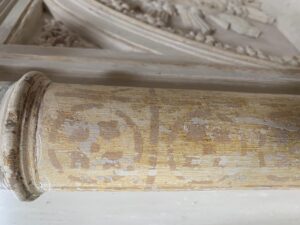
Like the high altar, the side altars were designed and built in 1898 by the same artists; church architect and decorator, Canon Georges Bouillon (1841-1932) together with one of his long-time collaborators, Flavien Rochon (1824-1902) and all three delivered to the monastery of the Sisters Adorers of the Precious Blood then located in New Edinburg.

The expert attention required to restore the side altars has been budgeted at $24, 800 (plus applicable taxes). To date $ 1, 825.00 has been contributed to the cost of the restoration project.
Thank you for your generosity.
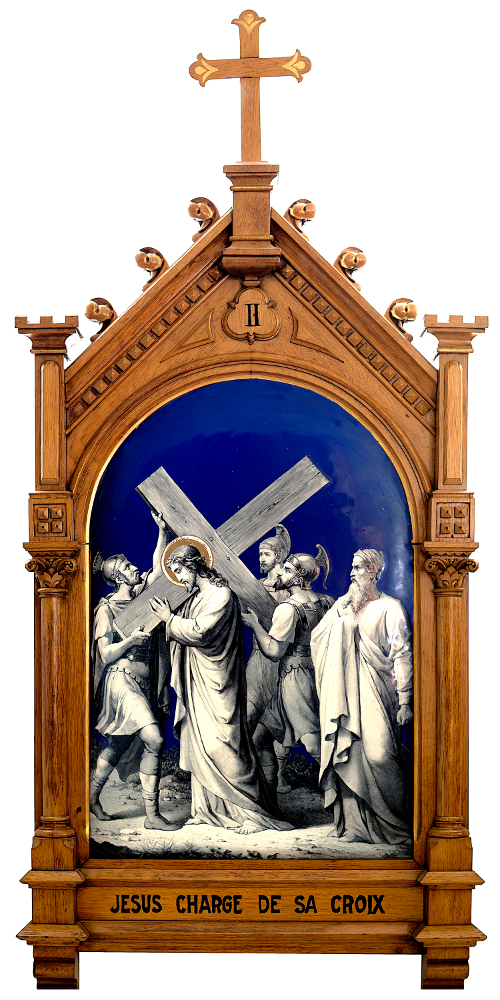

The Via Crucis – commonly known as the Way of the Cross – is a devotional exercise which allows the faithful to retrace the stations or events surrounding the Passion of Our Lord and to meditate upon their profound meaning. The fourteen stations illustrating particular events along the Way up to Calvary formerly varied considerably in number at different times and places until the eighteenth century when the devotion’s definitive form was established by popes Clement (1731) and Benedict XIV (1741). Today the Stations of the Cross are to be found in almost every church and chapel around the world. The scenes making up the Stations beginning with the Condemnation of Jesus and ending with the Placing of His Body in the Tomb are set at intervals around the church interior. As the faithful move from one to another of the stations along the “road” the fourteen are meant to recall, they follow the outlines of the church’s exterior form. In a sense then, the Via Crucis itself represents the entirety of the material symbols making up the individual “stations”.

The new Limoges Way of the Cross now installed in the nave constitutes a work of art. Very finely executed, each scene of the Via Crucis is painted in monochrome tones of grey against a blue background and laid down on enameled copper in a technique whose preliminary steps involve embossing a copper sheet to produce a convex surface able to resist successive firings which is in turn hammered to further enhance its rigidity. The composition is created by superimposing successive layers of enamel, each one applied and fired separately, beginning with the colours most resistant to the highest temperatures. The Via Crucis scenes were executed in France, possibly at Limoges, where the ancient technique of decorative enameling enjoyed a renaissance in the second half of the nineteenth century and the series produced under patent issued to the Parisian firm located in the Saint Sulpice quarter owned by Lucien Chovet who specialized in painting, gilding, bronze casting and the production of church ornaments. It has thus far been impossible to identify the individual artists responsible for the realistic scenes depicted by the Via Crucis. Each scene is surrounded by a niche-shaped frame of carved oak, stained, gilded and crowned with a cross. The 1889 gift to their chapel by members of the Congrégation de Saint-Roch de Québec, the Stations of the Cross were installed on January 10th 1890. In honour of the Congrégation’s fiftieth anniversary, their chapel was elevated to a church in 1901 and given the name Notre-Dame-de-Jacques-Cartier. A reorganization of Québec City parishes resulted in the church being closed in 2012. We are honoured to have been gifted such a fine example of the Via Crucis by the Council of the Fabrique of Notre-Dame de Saint-Roch. Contemporary with the period when Saint Anne Church was built, it complements the church’s interior superbly, inspires meditation and advantageously replaces the plaster castings formerly in place which had been substantially altered during renovations carried out in the church’s interior in 1967 when their frames were removed and white paint applied to them.
The installation of this superb Via Crucis represents the first important step in the restoration of the original dignity of Saint Anne Church, and its conformity to the liturgical requirements of the Extraordinary Form of the Catholic Liturgy.
– René Villeneuve, July 2014
|
 |
|---|---|
 |
 |
 |
 |
 |
 |
 |
 |
 |
 |
 |
|
Photos: Jean-Claude Grant
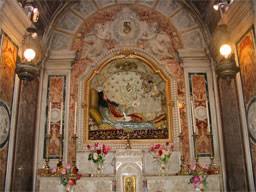
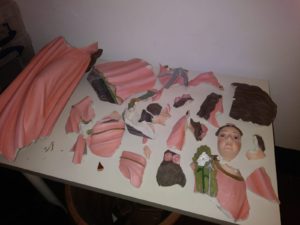
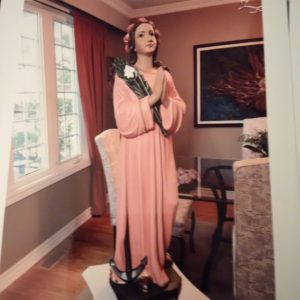
St. Clement Parish acquired, through the donation of a generous donor, a statue of St. Philomena. The journey was quite eventful so we would like to share the story with you. A video of the restoration of the statue can be found below. Fr. Breton had obtained the statue at the Shrine of St. Philomena in Mugnano, Italy (featured above). The statue looked like this in the shop:
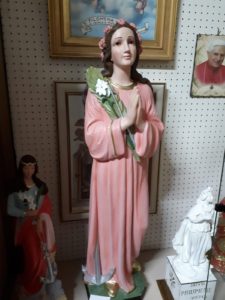
Much to our dismay, while in the hands of the Italian postal service, she ended up arriving like this :
The Italian postal service did not respond to our request for assistance and/or reimbursement.
Unsure of what to do next in what seemed to be an impossible circumstance, we contacted Pauline Furmanczyk-Winogron at Brushworks Ottawa (https://www.statuerestorers.com/), who began a restoration process — we were totally amazed:
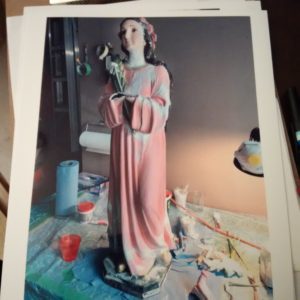
We were pleased with the result :
A video of the whole restoration process can be found below:
St. Philomena is the patron saint of children, youth, babies, infants, priests, sterility, virgins, and apparently, lost causes. Let us include her in our prayers — she will certainly pull together the pieces of the puzzle when things seem in disarray !
In Christo,
Fr. Erik Deprey, FSSP
Pastor
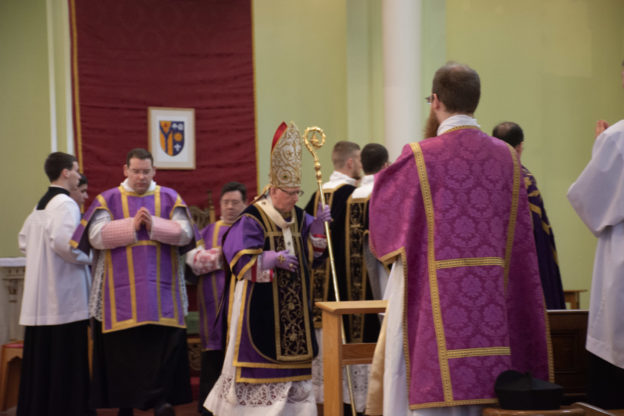
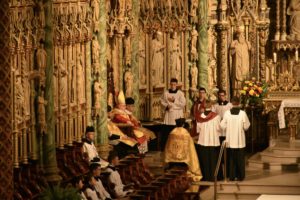
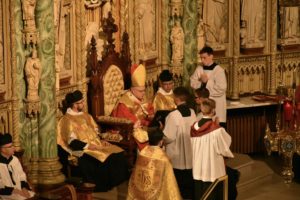
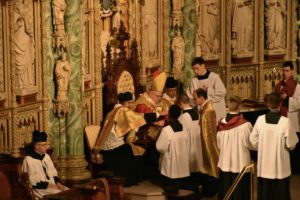
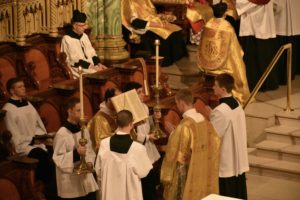
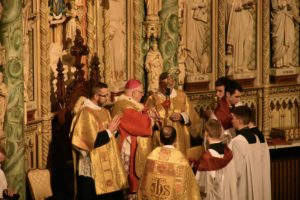
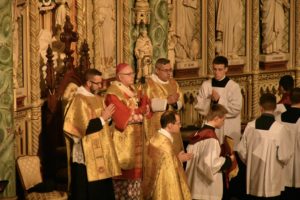
You may access the photos of our recent Pontifical Mass for Confirmations by opening the link below. We wish to thank Archbishop Prendergast, S.J., for making this mass possible. 44 were confirmed this year ! Deo Gratias !
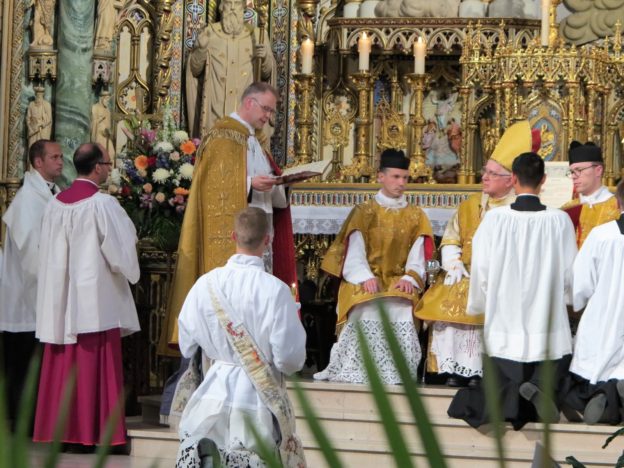
Here are photos and video of Fr. Luc Poirier’s ordination to the priesthood which took place on Friday May 31st, Feast of the Queenship of Mary:
Fr. Luc Poirier, FSSP ordination photos/video
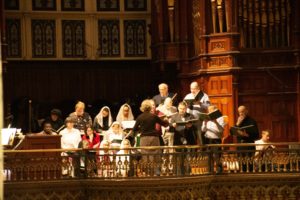
Special thanks to His Grace, Archbishop Terrence Prendergast, s.j., for ordaining Fr. Poirier and to Monsignor Berniquez, rector, for welcoming us and assisting us in the sacristy work. Many thanks as well to the servers, choir, organist, seminarians, visiting priests, and all those “behind the scenes” who contributed to such a beautiful Mass. May God reward you !


Our statue of St. Anthony of Padua has been restored, thanks to your generous contributions ! We would like to thank Brushworks for their fine work and our fellow parishioner Anastasia Bell for her assistance with the air brush treatment which helped remove the chipped paint !


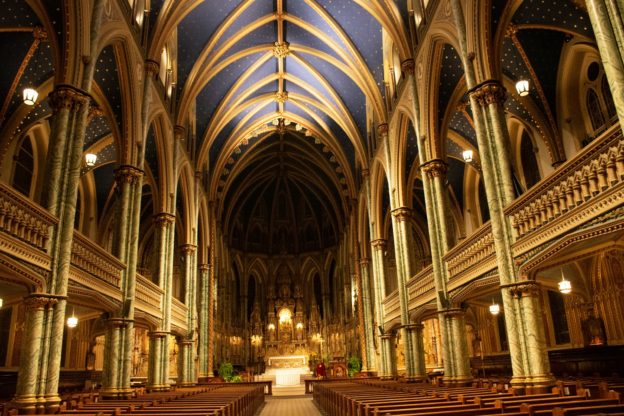
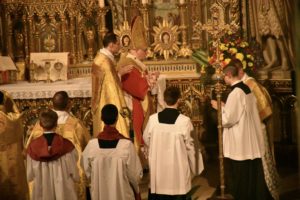

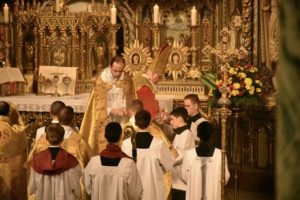

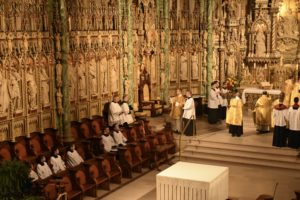
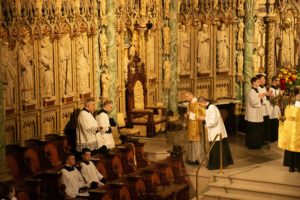
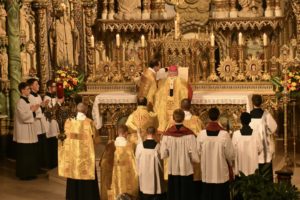
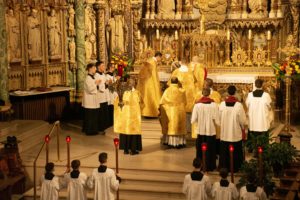
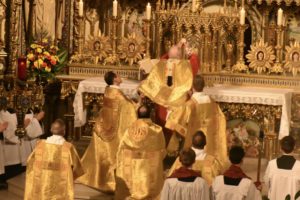
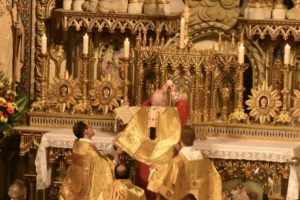
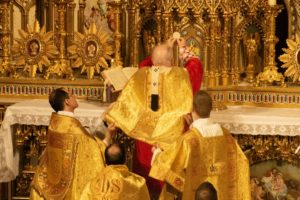
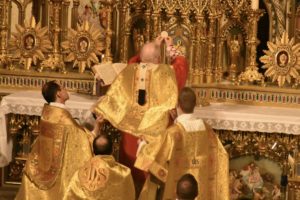
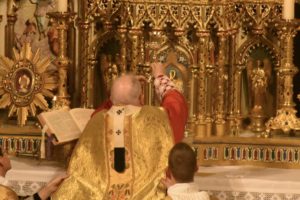
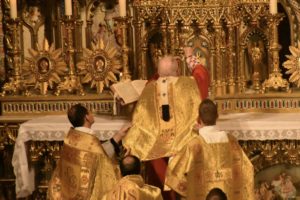
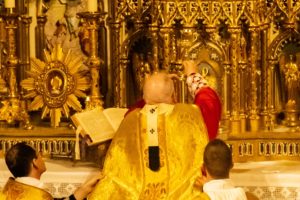
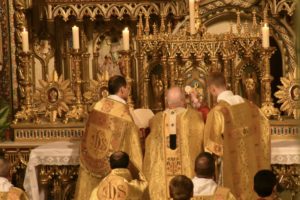
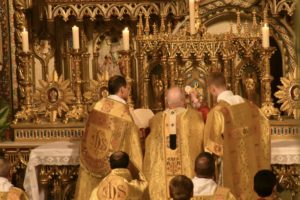
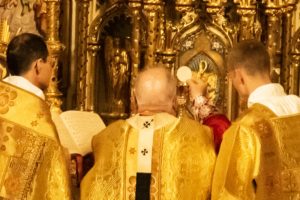
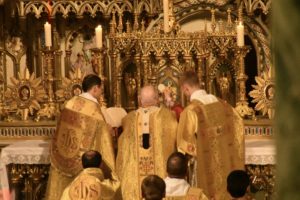
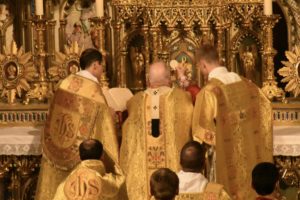
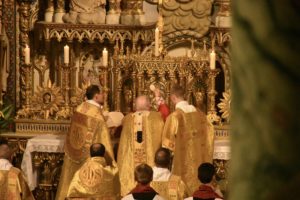
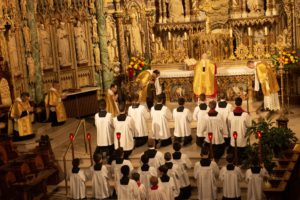
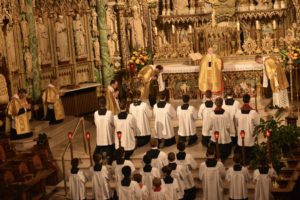
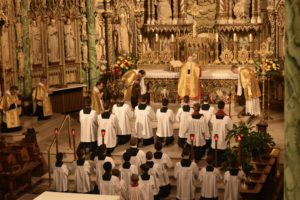
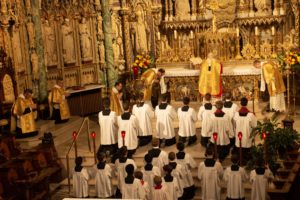
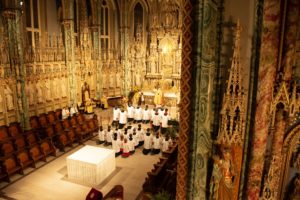
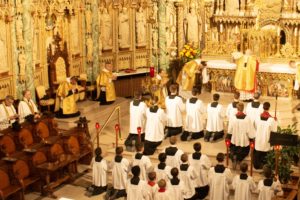
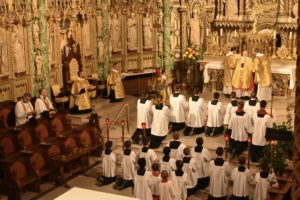
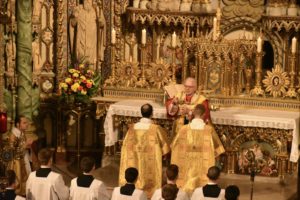
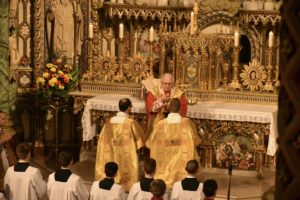
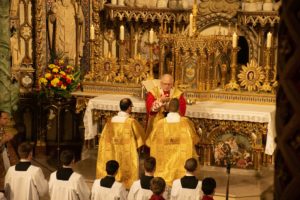
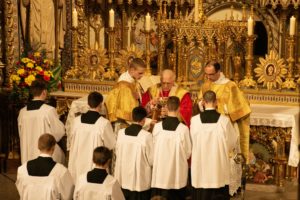
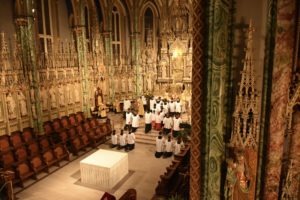
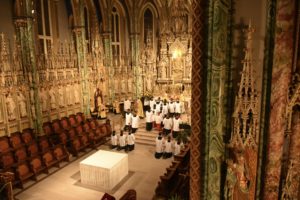
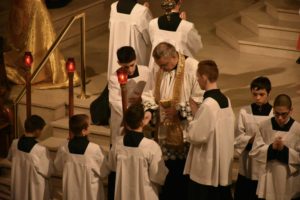
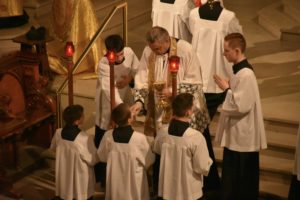
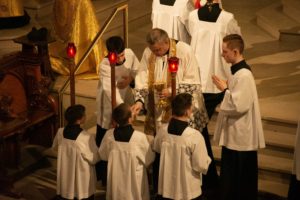
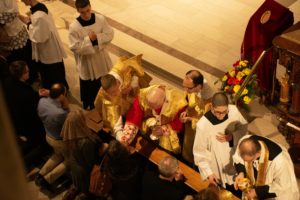
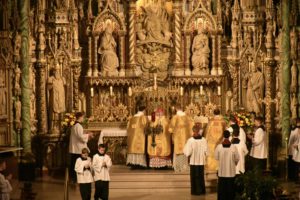
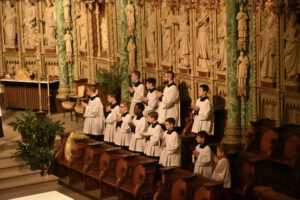
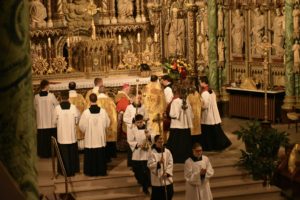


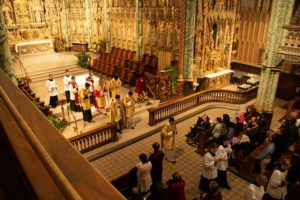
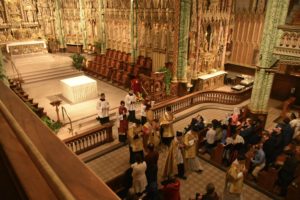
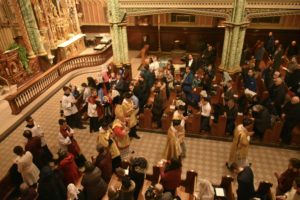

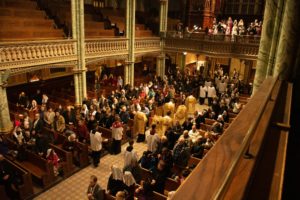
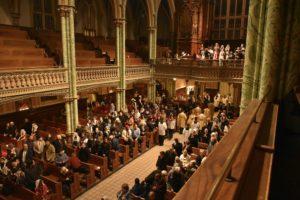

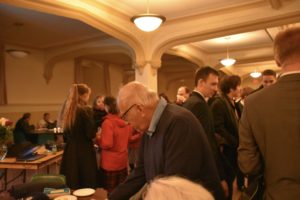
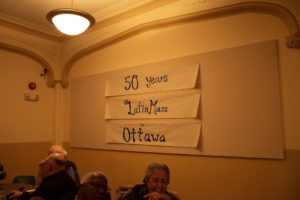
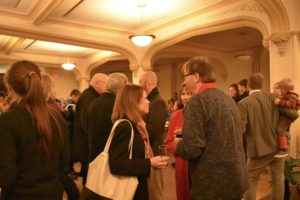
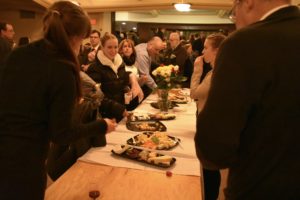

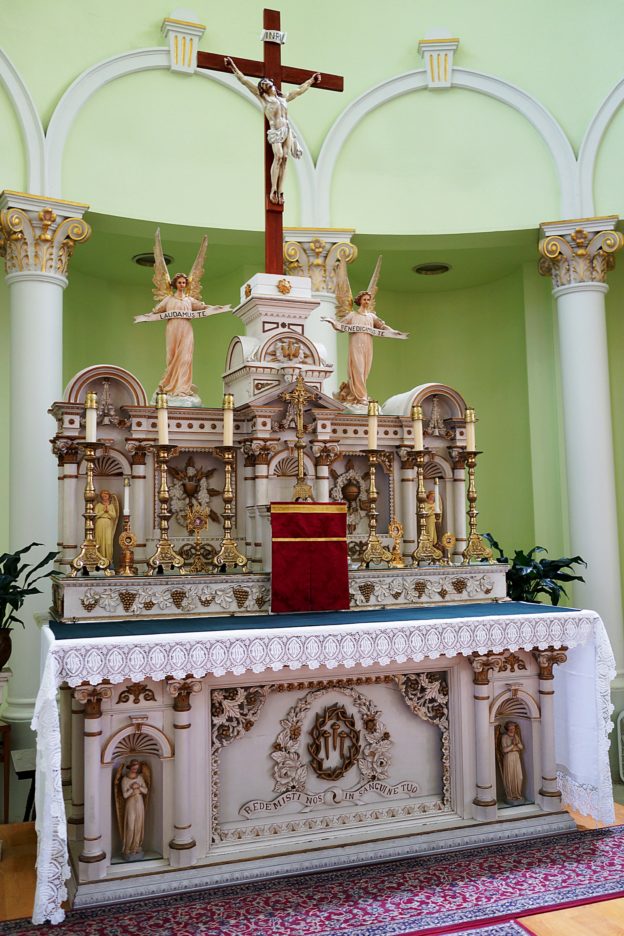
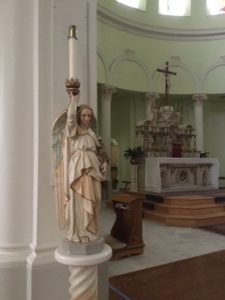
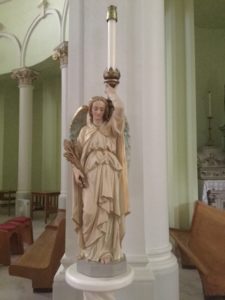
In what is surely a providential gesture, two statues of the guardian angels which originally stood sentry to the high altar in the former Monastery of the Precious Blood on Echo Drive have at long last been reunited with their charge as the result of a very generous gift made to the parish during its 50th anniversary year.
The angels have been reunited with the high altar thanks to the generosity of Darlene Lagasse and Denis Orbay, members of the Saint Clement Union of the Precious Blood.
When the Sisters Adorers were constrained in 1984 to bring their sanctuary into line with post-conciliar norms, the statues of the two angels, part of a larger company which had adorned the monastery chapel since 1923, were taken over by the Union of the Precious Blood. It was also at that time that Ottawa’s Latin Congregation assumed custody of the monastery’s three altars. Both angels and high altar remained separated for 34 years until this July 1, feast of the Precious Blood, when they were at last once more brought together.